
Sourcing Guides · The Anatolia Journal
Pre-Production Sample Approval: A Checklist Before Bulk Apparel Production
Turn a sample review into a clear production reference with recorded measurements, material decisions and an explicit approval status.
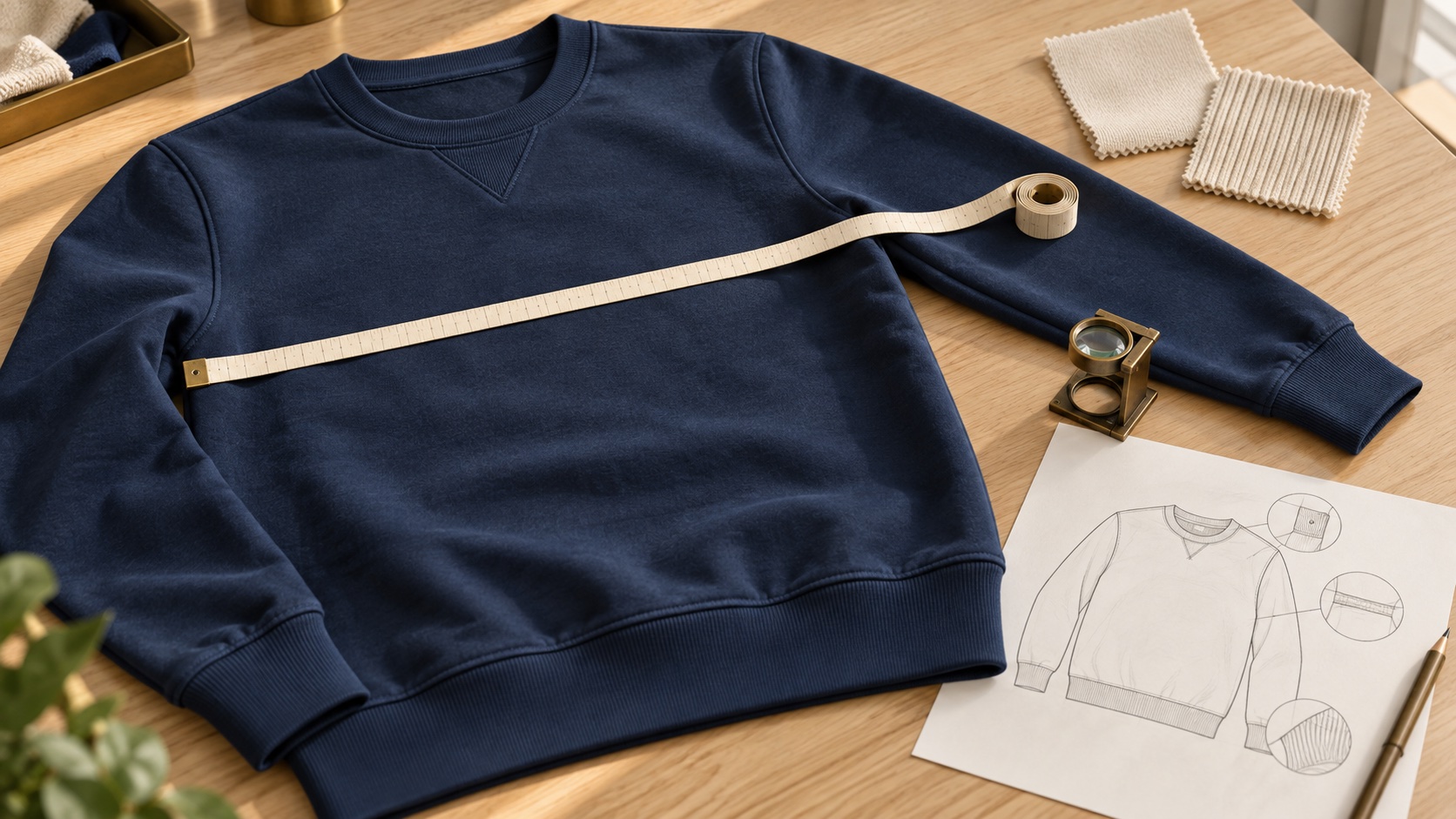
The key decision
An approval should identify exactly what was reviewed, what was accepted and what still needs a decision before production.
“The sample looks good” is useful feedback, but it does not tell a production team which material, size specification or revision has been accepted. A pre-production sample review should turn a physical garment into a traceable decision.
This is a recommended review workflow for buyers coordinating apparel production. It goes deeper into the approval stage introduced in our guide to sourcing clothing from Turkey, with a focus on keeping unresolved details visible.
Agree what this sample is intended to confirm
Ask the supplier to describe the sample stage and the decisions requested from you. Confirm whether the garment uses the intended bulk materials, colour, trims, labels and finishing, and identify anything substituted or still provisional.
Do not assume that every supplier uses sample names in exactly the same way. A development or fit sample may answer a different question from the final reference proposed for production. Agree the meaning for your project in writing.
Individual buyers also set their own review policies. For example, Swag Pro’s published policy describes when its business requests pre-production samples and distinguishes physical samples from photo reviews. Its policy illustrates the need to agree a process; it is not a universal rule for Turkish apparel orders.
Give the sample a clear identity
Record the style code, sample version, size, colour and date received. Attach the current technical file and name the person who can approve it. If the supplier sends several samples, avoid referring to them only as “the blue one” or “the latest package”.
A practical record could identify “Style A, revision 03, sample size M, navy, received 30 October”. That is an illustrative format, not a product specification. Use a numbering system that both sides can repeat consistently.
Keep the reference with the sample and the review photographs. If a new revision arrives, make clear whether it replaces the complete garment reference or only one agreed detail.
Review measurements, construction and appearance separately
Use the agreed measurement method and the correct size specification. Record actual findings beside the target values rather than replacing them with a general “fit approved” note. If the measurement method or tolerance has not been agreed, resolve that before treating the review as a pass/fail decision.
Review the garment as a complete product and as a collection of details. Confirm how the supplier wants comments on seams, finishing, decoration and component placement to be recorded. Where a photograph is helpful, include enough context to show which part of the garment is affected.
| Review area | Evidence to keep |
|---|---|
| Fit and measurements | Correct size specification, measurement method and recorded findings. |
| Fabric and colour | Identified material and colour reference, with provisional items flagged. |
| Construction | Annotated detail photographs and agreed correction notes. |
| Branding and packing | Label placement, artwork version and packing reference reviewed. |
State the approval status without ambiguity
Choose a status that matches the decision: approved as reviewed, revision required, or pending a named confirmation. If you approve a specific part while another remains open, state that limitation clearly and confirm what work, if any, may proceed.
A conditional comment such as “approved, but change the fabric” can be misunderstood because the change may affect the product being approved. Ask whether a revised physical sample or another agreed review is needed after the change.
Put every open point in one log with an owner and a next action. A short consolidated record is easier to follow than corrections spread across messaging apps, email attachments and phone calls.
Keep the approved reference connected to production
Agree who retains the reference garment and how production staff will identify it. Link the final review record to the product specification, artwork and packing instructions being used for the order.
Ask the supplier to raise any proposed substitution before implementing it. Record your decision and consider whether the substitution changes an earlier approval. Do not let an apparently minor component change silently replace the reference that both sides accepted.
For coordination across the wider project, explore our sourcing process. Approval is one control point within production follow-up, rather than a guarantee that every item in an order will be identical.
Complete the approval checklist
- Sample stage and purpose agreed.
- Style, revision, size and colour identified.
- Current specification and artwork attached.
- Actual materials and any substitutions recorded.
- Measurement and construction review completed against agreed criteria.
- Branding and packing details checked where included in this stage.
- Open issues assigned with a next action.
- Approval status and permission to proceed stated explicitly.
- Reference retention and later change handling agreed.
Before sending the final message, read it as someone who did not attend the review. Can that person identify the correct sample, understand the remaining work and tell whether production may proceed? If not, clarify the record first.
Our sample development service is a starting point for discussing the review sequence your product needs.
Common questions
Is a pre-production sample the same as a fit sample?
Do not assume that the names are interchangeable. Ask what each stage covers and whether the proposed reference includes the actual materials, trims and finishing intended for production.
Can I approve a sample using photographs?
Agree the review method with the supplier and identify its limitations. A photograph may show appearance or placement, while a physical review allows additional checks such as handle and fit.
What if a detail changes after approval?
Record the proposed change, its owner and its effect on earlier decisions. Agree whether the changed detail requires a revised sample or another review before work continues.