
Sourcing Guides · The Anatolia Journal
How to Source Clothing from Turkey: A Practical Guide for Fashion Brands
From your first product brief to sample approval: a clear, seven-step approach to finding the right production partner for your next collection.
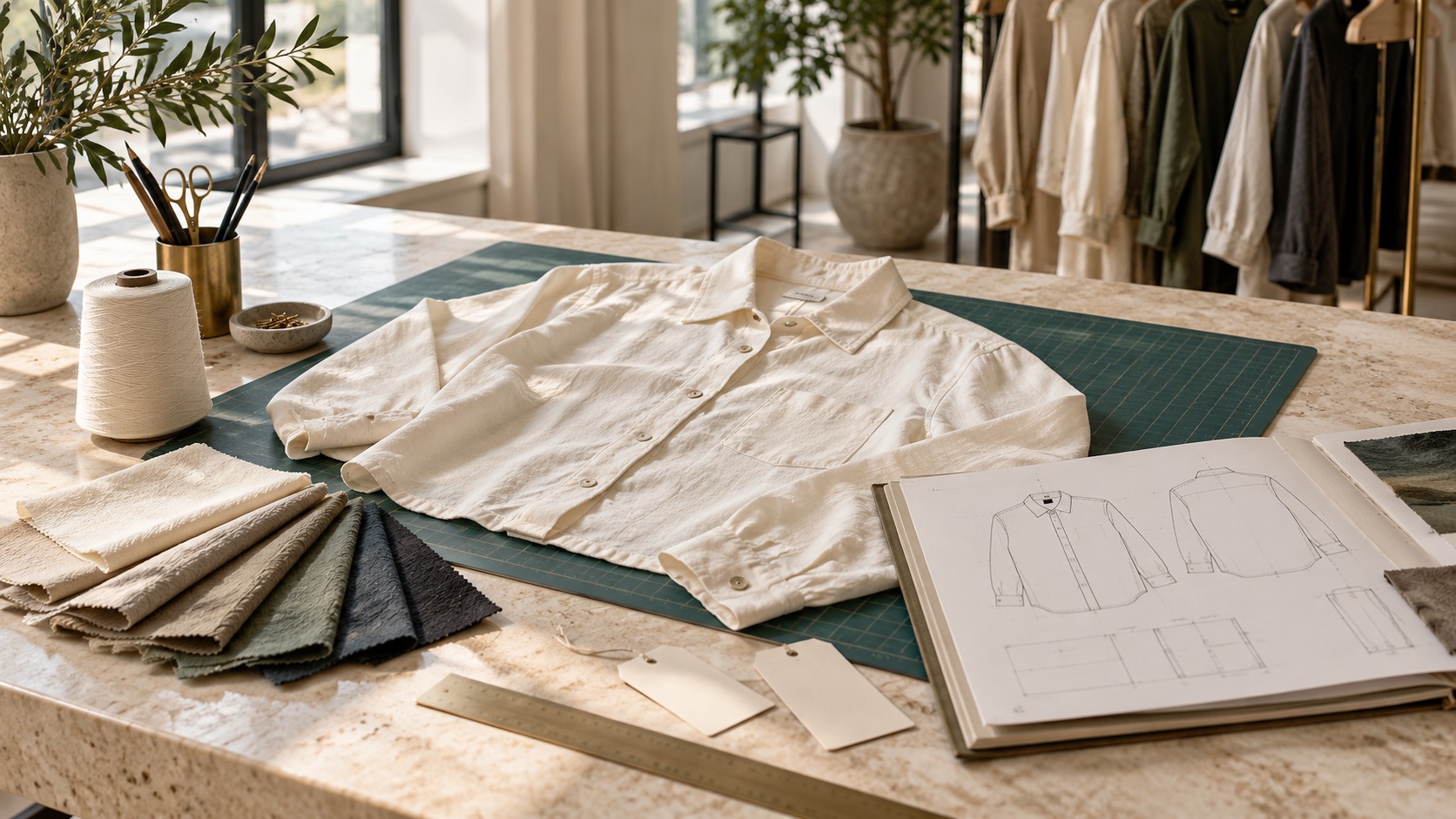
The starting point
A useful sourcing conversation begins with a clear product, a realistic quantity and an agreed approval process. Get those three things in place before treating a quotation as a production plan.
Sourcing clothing from Turkey starts long before a purchase order. A fashion brand may have a strong visual direction, but a supplier still needs practical answers: what is being made, which materials are required, how the garment should fit and what must be approved before production begins.
This guide sets out a recommended workflow for brands, retailers and wholesale buyers preparing their first enquiry. Use it to organise your request and make supplier conversations easier to compare.
Step 01
Define the product before the supplier search
Start with one product family or a tightly focused capsule. “We need a clothing manufacturer” leaves too many questions open. “We are developing an oversized jersey T-shirt in two colours, with a defined size range and custom neck labels” gives the conversation a useful direction.
Decide whether you want to source an existing style, adapt an available product or develop a garment from your own specifications. These are different projects. A ready-made product with a new label should not be compared directly with a fully custom design.
Explore the apparel categories we source to choose a starting point for your enquiry.
Step 02
Turn the idea into a usable product brief
A tech pack is the technical reference for a garment. It can bring together drawings, materials, measurements, construction details and artwork placement. Shopify’s tech-pack guide explains these components in more detail.
For an initial enquiry, prepare the following information, and clearly mark anything that still needs development:
- Product and fit: garment type, front and back references, intended silhouette and size range.
- Materials: preferred fibre composition, fabric weight if known, colours and finishing.
- Quantity: your proposed units by style, colour and size.
- Branding: labels, print or embroidery, hangtags and packaging ideas.
- Timing: your target launch or delivery date, destination and approval contact.
Reference photographs are useful, but add notes explaining which details matter. A photograph alone may leave fit, fabric and construction open to interpretation.
Step 03
Match the supplier to the project
Assess the proposed supplier against your specific garment. Ask to see relevant product examples and clarify which parts of the work the business handles directly. Identify who will coordinate fabric, sampling, decoration, production and packing, including any subcontracted stages.
Use the first conversation to test clarity as well as capability. Can the supplier explain what is feasible, identify missing information and describe the next approval step? Keep a written record of the answers so that the decision is based on more than a portfolio image.
If traceability or certification is part of your brief, request evidence for the specific material, facility and order. Sector initiatives are useful context, but they do not verify an individual supplier. The International Apparel Federation describes İHKİB’s work on supplier traceability and digital reporting in its industry project overview.
Step 04
Compare quotations on the same basis
Send the same brief and revision number to each shortlisted supplier. When quotations arrive, place their assumptions next to each other. A price is difficult to interpret if one proposal includes your chosen fabric and packaging while another leaves them undecided.
| Compare this | Ask the supplier to confirm |
|---|---|
| Product specification | Fabric, fit, finishing and decoration included in the quotation. |
| Minimum order quantity | Whether the minimum applies per style, fabric, colour or total order. |
| Development scope | Sample stages, revisions, charges and items still to be approved. |
| Delivery scope | Estimated schedule, packing, dispatch point and transport responsibilities. |
Request clarification where assumptions differ. Keep the latest agreed specification attached to the quotation rather than relying on details scattered across messages.
Step 05
Approve a sample against written criteria
Before requesting a sample, agree what that sample is meant to prove. An early development sample may address shape or construction; it should not automatically be treated as approval of every bulk-production detail.
Review measurements, fit, fabric feel, stitching, colour, decoration and branding against the brief. Record each comment in one revision document, with annotated photographs where helpful. Ask which materials or components remain provisional.
Before authorising production, agree the final reference sample and the written details it represents. Read more about our sample development approach and private label options.
Step 06
Agree how production will be followed
Set a communication rhythm and identify the person responsible for approvals on each side. Decide which updates you need and when: material confirmation, a production progress review, measurement checks and packing confirmation are useful discussion points.
Ask the supplier to flag a proposed substitution or schedule change before it is implemented. Keep product changes in the same revision record used during sampling. At the packing stage, confirm quantities by size and colour, carton details and the documents needed for the agreed dispatch process.
Step 07
Run a final check before you commit
Use this checklist at the end of the development conversation. Any unresolved item should have an owner and a next step.
- Latest product brief and revision number shared.
- Quantity breakdown and minimums confirmed.
- Sample comments resolved and approval reference recorded.
- Fabric, colours, labels and packaging agreed.
- Quotation scope and order terms reviewed.
- Production updates, checks and responsibilities agreed.
- Delivery assumptions and outstanding decisions documented.
Common questions from first-time buyers
What is the minimum order quantity for clothing from Turkey?
There is no single minimum that applies to every supplier or product. Ask for the minimum against your exact style, fabric, colour breakdown and customisation requirements. Confirm whether a quoted minimum is per colour or for the order as a whole.
Can I enquire without a finished tech pack?
Yes. Send the references and specifications you have, then identify what needs development. Ask what additional information is required before an accurate quotation or meaningful sample can be prepared.
How long will sampling and production take?
Request a project-specific schedule. Ask what starts each stage, which approvals are dependencies and what remains subject to material availability or production capacity. Avoid setting a launch date around an unconfirmed estimate.
What should I send in my first enquiry?
Include the garment category, references, approximate quantity, fabric preference, size range, branding needs, destination and target timing. Mark undecided details so they can be discussed rather than assumed.