
Sourcing Guides · The Anatolia Journal
GSM in Clothing: How to Compare Fabric Weight for T-Shirts and Hoodies
A practical way to compare jersey, loopback and fleece without treating a single weight figure as a complete fabric specification.
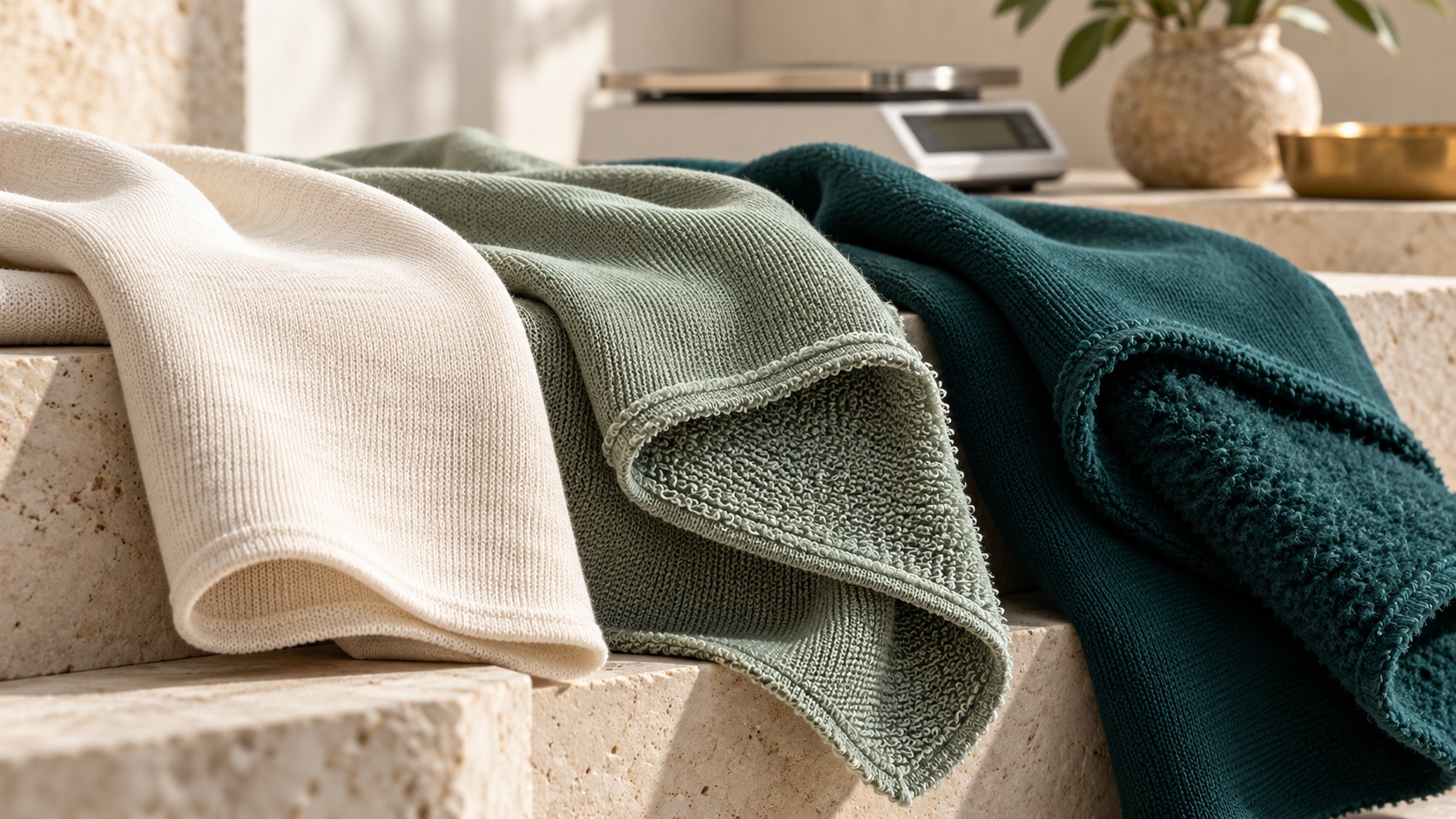
The key decision
Use GSM to describe fabric mass per area, then compare the construction, finish and a physical garment sample before choosing the fabric.
A buyer asks for a heavier T-shirt, a supplier offers a higher GSM, and both assume they are discussing the same result. Yet the finished garment may still look or feel different from the reference. The missing information is often the fabric structure and finishing, rather than the weight figure itself.
This guide explains how to use GSM in an apparel sourcing brief and how to compare candidate fabrics for T-shirts and hoodies. It is a decision framework, not a universal weight chart.
What does GSM mean in clothing?
GSM means grams per square metre: the mass of a defined area of fabric. A 200 GSM fabric has a mass of 200 grams per square metre. This is a fabric measurement, not the weight of a complete garment. The general subject of fabric mass per unit area is covered by ASTM’s fabric-weight test-method overview.
Two garments cut from the same fabric can have different total weights because their size, shape, trims and fabric consumption differ. Ask for the fabric specification rather than trying to calculate GSM from the weight of a finished hoodie.
For a meaningful comparison, also ask whether the supplied figure refers to the material before or after the finishing stages relevant to your order. Record the agreed basis in the brief.
Compare the knit construction before the weight
Jersey, loopback and brushed fleece describe different fabric characteristics. CottonWorks explains that knit weight and drape can change with yarn and fibre choices, and describes jersey as a versatile construction used in T-shirts. Its single and double knit guide is a useful starting point for understanding construction.
As a buying exercise, place candidate swatches beside the reference and review both faces. Look at surface texture, stretch response, the reverse and how the fabric hangs. Ask the supplier to identify each construction and finishing route in writing.
A heavier candidate may suit your design, but a weight number cannot stand in for an agreed appearance, handle or performance requirement. Treat those as separate approval points.
Build a comparison around the intended garment
Start with the use and silhouette you want, then ask which available fabrics could support that result. An oversized T-shirt and a fitted layering tee need different conversations even when the same customer buys both.
| Review point | T-shirt discussion | Hoodie discussion |
|---|---|---|
| Appearance | How does the body hang and how does the neckline sit? | How do the hood, body and cuffs hold the intended shape? |
| Surface | Review the face and proposed print area. | Review the face, reverse and decoration area. |
| Movement | Check fit and movement in the intended silhouette. | Check sleeve movement and layering with the intended undergarment. |
| After care | Compare the sample with your agreed size and appearance criteria. | Review the body, rib, seams and hood together after the agreed care trial. |
These are recommended review questions, not pass/fail limits. Agree the actual criteria with the production partner. Use our product categories to frame the garment enquiry.
Write a brief that a supplier can answer
Instead of asking only for “heavy cotton”, provide a reference garment or swatch and identify what you want to match. State which characteristics are essential and which are open to alternatives. If a desired weight has not been measured, label it as an estimate.
An example enquiry could say: “We are developing a relaxed jersey T-shirt. Please propose two fabric options close to the attached reference, identify composition, construction and finished fabric weight, and explain any difference in handle. We will review swatches before selecting the garment sample route.”
Ask the supplier to explain material availability and whether a proposed alternative changes the quotation or development plan. Keep a revision number so that the fabric chosen for sampling is the same option discussed during costing.
Our fabric and yarn sourcing service provides a route for discussing these material requirements.
Approve the fabric and the garment together
Keep a labelled swatch for each candidate and record the supplier’s specification beside it. Shortlist a fabric, then review it in a garment sample using the intended fit and finishing. A small swatch is useful for screening, but it cannot show the complete silhouette.
Before approval, agree the relevant checks, measurement basis and permitted variation with your supplier. Do not turn an untested reference or an assumed weight into a guaranteed bulk specification.
- Composition and knit construction identified.
- Fabric weight and the stage at which it is specified recorded.
- Face, reverse and finishing route confirmed.
- Reference swatch and garment sample clearly identified.
- Fit, appearance and care-review criteria agreed.
- Substitutions require a recorded buyer decision.
Explore sample development before making the final material choice.
Common questions
Is a higher GSM always better quality?
No single weight figure describes all the qualities a buyer needs. Compare the construction, material specification, finishing and sample against your intended product.
Can two fabrics with the same GSM feel different?
Yes. Compare their composition, construction and finishing as well as the stated weight. Request physical swatches rather than assuming that the number defines the handle.
What GSM should I choose for a hoodie?
Start with the desired garment, use and silhouette. Ask for suitable fabric options and compare samples; there is no one number that is right for every hoodie project.