
Sourcing Guides · The Anatolia Journal
Lab Dip Approval for Clothing: From Colour Standard to Bulk Shade
A practical colour approval workflow for buyers coordinating fabrics, trims and repeat production.
The key decision
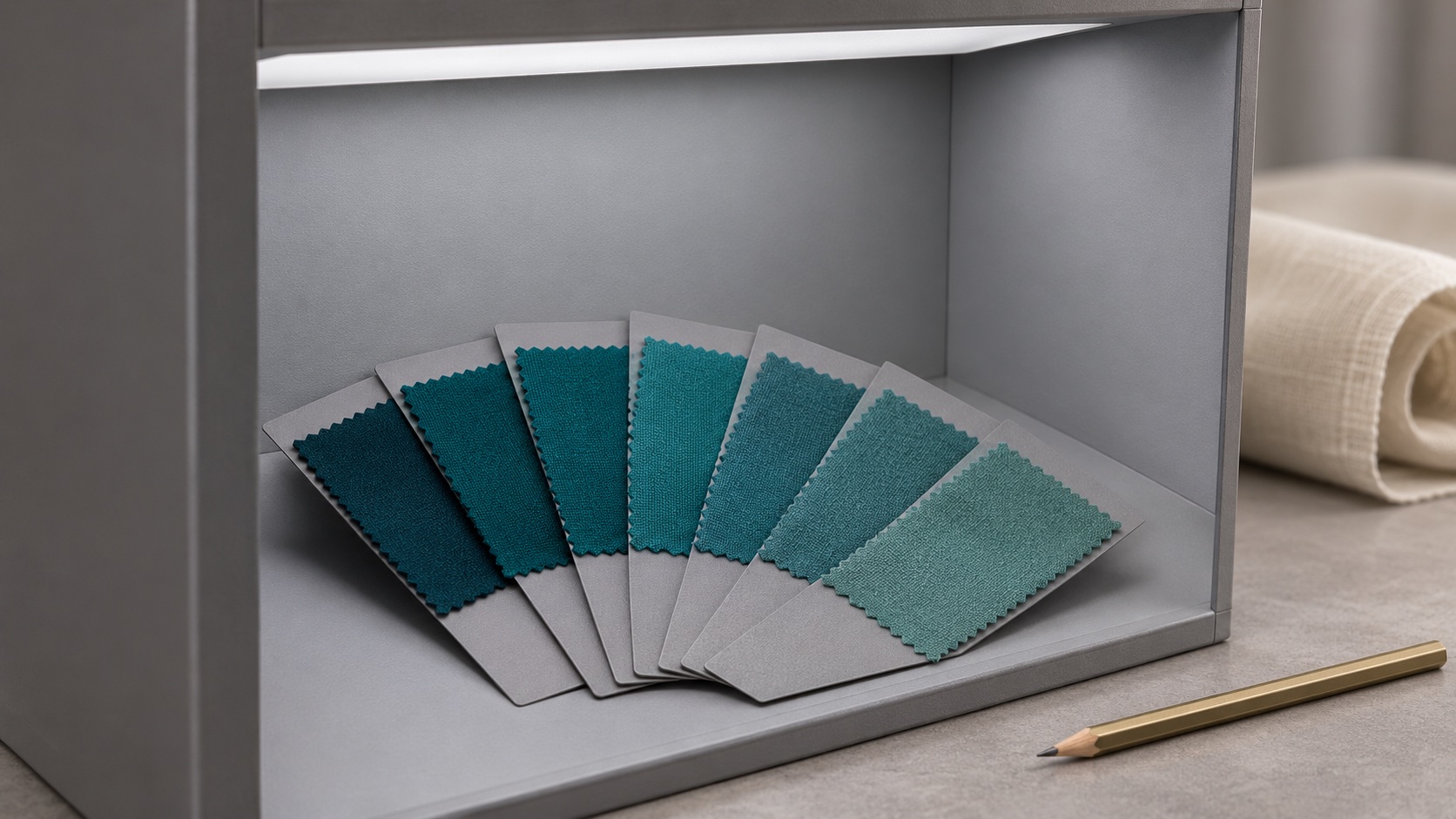
Approve an identified colour sample against an agreed standard and viewing conditions, then keep bulk shade review as a separate recorded step.
A message saying ‘the teal looks good’ is difficult to use when a dye house, buyer and garment maker are viewing different samples in different places. A useful lab dip approval records exactly which shade was reviewed, on which material, and against which reference.
For international clothing buyers working with suppliers in Turkey, the aim is a traceable colour decision. This guide focuses on plain-dyed material and the handover from development colour to bulk shade review; printed strike-offs and garment-dye programmes need their own agreed submission process.
1. Understand what a lab dip represents
A lab dip is a small dyed material submission used to develop a target colour. CottonWorks describes the process as starting with a specified colour and substrate, with iterations before the approved formula is scaled for production.
Record the actual substrate: fibre blend, knit or weave, material reference and intended finish. A colour reference approved on one fabric should not silently become an approval on a different construction. Ask for confirmation when the material changes and decide whether a fresh submission is needed.
Keep the lab dip decision separate from fit, shrinkage and garment workmanship. A successful colour submission does not close every other item in the pre-production approval record.
2. Send one usable colour brief
Choose one controlling colour standard and identify it clearly. Where physical references are used, give each party a matching, controlled reference and a version date. A screen image can communicate design intent, but it should not become the only acceptance reference unless the parties have explicitly agreed a suitable digital colour workflow.
The request should list the style and colour name, material reference, standard identifier, required finish, submission format, review owner and requested timing. State whether matching rib, sewing thread, zip tape or other components will be reviewed together or separately.
For repeat orders, identify whether the controlling reference remains the original standard or an approved prior bulk lot. Do not allow that decision to drift through informal comments. When multiple people can review a submission, appoint one person to consolidate the final response.
3. Agree viewing conditions and technical criteria
Two samples can appear to match under one light and differ under another. X-Rite explains this behaviour as metamerism. Agree the required light sources and viewing conditions with the colour team, and compare relevant garment components together.
If instrumental colour assessment is required, specify the measurement setup, colour-difference calculation and acceptance tolerance with a qualified colour specialist. A standalone delta-E figure without its calculation and measurement conditions is an incomplete acceptance rule. Do not copy a threshold from another buyer or assume that passing an instrument check removes the need for the agreed visual review.
X-Rite’s textile workflow example combines a communicated colour specification and tolerance with measurement and visual comparison of components. The exact equipment and approval system remain a buyer-and-supplier decision.
4. Make feedback precise enough to act on
| Record | What to include | Avoid |
|---|---|---|
| Submission | Unique dip reference, substrate and date | An unlabelled set of swatches |
| Comparison | Controlling standard and agreed review conditions | A phone photograph as the sole evidence |
| Feedback | One consolidated decision with specific direction | Conflicting comments from several reviewers |
| Status | Approved, resubmit or hold, with scope stated | A vague ‘okay’ with no reference |
| Retention | Matching approved references held by relevant parties | Different versions circulating as the master |
When requesting a correction, identify the comparison reference and describe the direction clearly. Ask the colour specialist to translate subjective comments into the agreed technical feedback where necessary. Do not approve one option verbally while annotating a different option on the submission card.
5. Define the next colour checkpoint before release
An approved development dip should have a defined connection to the bulk submission. Agree which production material will be submitted, how lots will be identified, who reviews them and what must happen before cutting or assembly. Retain the accepted bulk shade reference with the order record.
Where a garment uses matching components, review the intended combination rather than isolated colours alone. Main fabric, rib and trim may need a coordinated decision even if each has its own supplier. The private label brief should identify those components early.
- Link the approved dip to the exact material and colour reference.
- Define the bulk shade submission and review owner.
- Identify lots or rolls that need separate assessment.
- Record any accepted variation and its limited scope.
- Resolve open colour issues before the agreed release point.
Use the sampling stage to settle this workflow while revisions are still manageable. Repeated messages asking whether a colour is approved are a sign that the reference or decision record needs clarification.
Common questions
Can I approve a lab dip from a phone photo?
A photo can help explain a comment, but camera, display and lighting differences make it a weak sole colour reference. Use the physical or controlled digital approval system agreed with your colour team.
Does an approved lab dip approve every production lot?
Define the scope explicitly. Keep bulk shade submissions and any lot-specific decisions connected to the development reference rather than assuming that the first approval covers everything.
Should every fabric use the same colour tolerance?
Do not assume so. Agree the appropriate visual and instrumental criteria for the materials and product, with the measurement conditions documented.