
Sourcing Guides · The Anatolia Journal
French Terry vs Brushed Fleece: Choosing Sweatshirt Fabric
Compare the reverse surface, finished weight and garment sample before choosing a material for your next hoodie or sweatshirt.
The key decision
Choose the complete fabric-and-finish specification, supported by a garment sample, rather than approving a material name on its own.
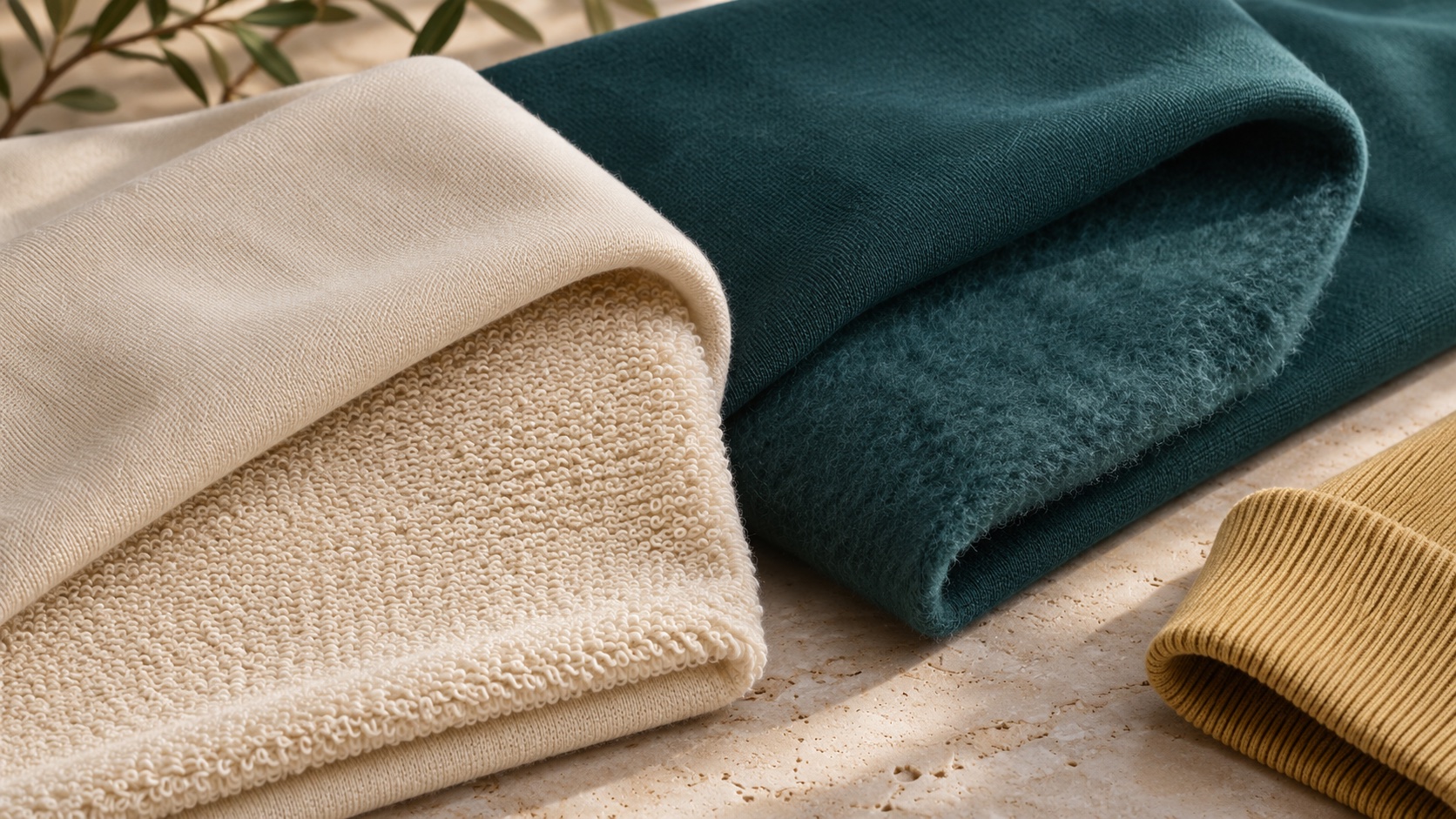
Two sweatshirt fabrics can have similar colours and weights while creating quite different experiences inside a garment. One has a visible loopback; the other has a brushed, fuzzy reverse. That difference is useful to discuss, but it is only the beginning of a material decision.
This guide compares loopback French terry with brushed-back sweatshirt fleece for apparel buyers sourcing from Turkey. The word fleece also covers other fabric families, so ask the mill to identify the exact construction and finishing route being offered.
1. Identify the surface you are approving
Start by turning the swatch over. For the loopback option, examine the shape and consistency of the loops. For the brushed-back option, examine the raised surface and how evenly it has been finished. Keep a photograph of both sides with the supplier’s material reference.
AS Colour’s fabric guide describes the loopback on its cotton French terry, providing a useful first-party example of that surface. CottonWorks’ mechanical-finishing guidance explains processes including napping that manipulate fabric surfaces. The supplier should still confirm the finish applied to the actual swatch you receive.
Agree the intended inside appearance in writing. A description such as ‘soft fleece’ does not identify the degree of brushing, the fabric composition or the reference that should control repeat production.
2. Compare the same attributes on both swatches
| Review point | Loopback French terry | Brushed-back sweatshirt fleece |
|---|---|---|
| Reverse surface | Confirm the visible loop structure | Confirm the raised, brushed surface |
| Handle | Assess the chosen loopback reference | Assess the chosen brushed finish |
| Weight | Specify the finished GSM | Specify the finished GSM |
| Composition | Request the full fibre breakdown | Request the full fibre breakdown |
| Approval evidence | Retain swatch and garment references | Retain swatch and garment references |
Use this as a comparison sheet, not a ranking. Neither name defines one universal weight or fibre blend. Two loopback developments may differ substantially, just as two brushed developments may differ.
Review the fabrics under the same conditions and record your observations separately from the supplier’s description. Words such as dry, plush or compact become more useful when attached to a physical reference everyone can identify.
3. Test the material in the intended silhouette
Specify finished fabric weight alongside the construction and finish. The GSM guide explains why weight alone cannot settle fabric quality. Avoid assuming that equal GSM means equal thickness, drape or perceived warmth.
Make the development sample in the intended silhouette. Review the hood, shoulder, pocket and hem rather than judging only a small swatch. Ask whether the selected material creates the volume and movement the design needs. A compact cropped sweatshirt and a relaxed hoodie may lead to different preferences.
If warmth, moisture management or another performance attribute is a product claim, define how it will be evaluated with the technical team. The inside surface and your first impression are useful design observations; they are not a quantified performance test.
4. Review rib, colour and decoration together
Place the proposed rib, main fabric and other visible components beside each other. Record their material and colour references. Review the garment combination after the intended finishing route, especially if the development changes between fabric approval and sampling.
Use the colour approval record to keep the main fabric and matching components traceable. If the style includes print or embroidery, request the decoration sample on the actual proposed material and review appearance, placement and the reverse side.
Record any accepted differences rather than leaving them to memory. A colour decision, a handle decision and a decoration decision can have different approval owners; the style file should make the final outcome clear to all of them.
5. Close the material decision with a complete brief
- Identify the mill’s fabric reference and construction description.
- State composition and finished GSM.
- Describe the required reverse surface and finishing route.
- Retain the agreed handle reference and both-side photographs.
- Link matching rib, colour and decoration submissions.
- Define the required wash, appearance and performance checks.
The garment shrinkage review and pilling report checklist cover two separate questions to consider in the approval plan. Agree which checks this product needs; do not assume a surface finish settles them.
Once a material is selected, carry its exact reference into the garment specification and any quotation comparison. If the supplier proposes an alternative later, review the changes against the same brief before accepting it.
Common questions
Is French terry always lighter than brushed fleece?
No. Ask for the finished GSM of each actual development. The fabric name alone does not establish its weight, thickness or suitability for your garment.
Does brushed fleece always contain polyester?
Do not infer composition from the name. Request the complete fibre breakdown for the actual material and keep it in the approved specification.
Can I choose between them using a swatch only?
A swatch is a useful first comparison, but review the chosen fabric in the intended garment silhouette and with the planned components and finish before closing the development decision.